

How to Choose and Use a Shower Hygiene Brush for a Cleaner, More Comfortable Routine
Key Takeaways
A shower hygiene brush can make washing easier when its texture, reach, and cleaning routine suit your body. The goal is comfortable, consistent cleansing—not aggressive scrubbing.
- Choose softness and reach based on your skin and mobility needs.
- Use light pressure, short controlled movements, and lukewarm water.
- Avoid brushing irritated, broken, or sunburned skin.
- Rinse and dry the brush fully after every use.
- Replace it when the material stays damp, smells, or begins to deteriorate.
What a shower hygiene brush is and how it works
A shower hygiene brush is a personal cleansing tool used with water and body wash. It can help spread cleanser, reach areas that are difficult to wash by hand, and provide a little extra texture during a shower. The best choice feels comfortable enough to use regularly. For broader everyday guidance, this showering hygiene guide offers helpful context on building clean, practical habits.
Common brush designs and handle lengths
Short-handled brushes are easy to control and work well for the arms, legs, chest, and abdomen. Long-handled versions can help reach the back, feet, or lower legs without excessive bending or twisting. Some designs have loops, contoured grips, or flexible heads, while others keep a simple, firm shape. Choose the design that makes the motion feel natural rather than treating length as a measure of cleaning power.
How bristles, mesh, and silicone surfaces differ
Bristles usually create a more noticeable brushing sensation, while mesh can produce lather quickly and silicone surfaces are often easier to rinse. Texture matters because a surface that feels pleasant at first may become uncomfortable with repeated pressure. Softer materials are generally a better starting point for dry or reactive skin. There is no single material that suits every person.
Which parts of the body a brush can help reach
A brush may be useful on broad areas such as the back, shoulders, legs, and feet. A long handle can also make washing more manageable for someone with limited reach, stiffness, or balance concerns. Use extra care around folds and sensitive areas, where friction can build quickly. A brush is an aid, not a reason to scrub every part of the body with equal intensity.
What a shower brush can and cannot do for hygiene
A brush can support regular washing, but it does not sterilize skin or replace medical treatment. Cleanser, water, thorough rinsing, and a brush that is kept clean all matter more than a dramatic scrubbing sensation. Comfortable consistency matters most when choosing a routine. If a change in odor, rash, pain, or skin texture persists, ordinary brushing is not the answer.
How to choose the right shower hygiene brush
Start with your skin, reach, and shower setup rather than choosing by appearance alone. A good shower hygiene brush should be comfortable in a wet hand and simple to rinse after use. It should also make the areas you want to wash easier to access. The right match can turn an awkward task into a manageable part of your routine.
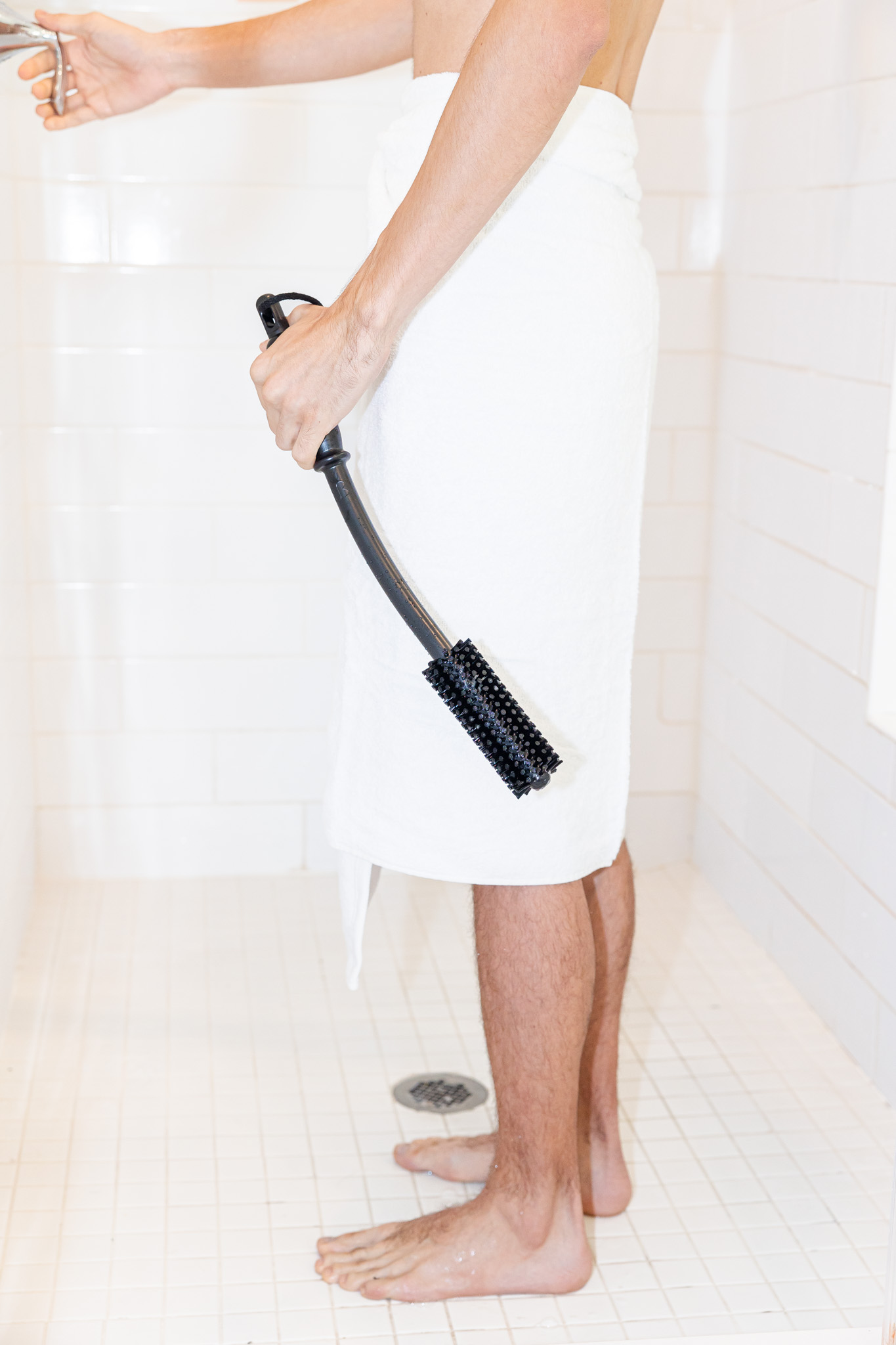
Matching the brush to your skin type
Normal skin may tolerate a range of textures, but a gentler surface is still a sensible first choice. Dry, sensitive, or easily irritated skin may do better with minimal friction and less frequent brushing. Oily skin does not automatically need a rough brush; stronger scrubbing can leave the surface uncomfortable. Pay attention to how your skin feels later that day, not only during the shower.
Selecting the right firmness and texture
Firmness should be judged with a light touch. If the brush feels scratchy when barely pressed, it is probably too firm for regular use. A smooth silicone surface or soft bristle can be easier to control than a dense, stiff texture. Test a small area first and stop if you notice burning, persistent redness, or tenderness.
Comparing short-handle and long-handle models
A short handle offers close control and is easy to store in a small shower. A long handle can reduce reaching and bending, especially when washing the back, ankles, or feet. Consider whether the handle stays secure when wet and whether its weight feels tiring. Accessibility is personal, so the most useful length is the one that reduces strain for you.
Evaluating grip, drainage, and shower storage
Look for a grip that remains manageable with soapy hands and a surface that does not trap excessive water. A hanging loop or ventilated storage spot can help the brush dry between uses. Keep it away from the shower floor, where it can collect residue. If you are also cleaning the bathroom itself, separate personal tools from household tools; this shower maintenance advice explains why damp spaces need regular care.
How to use a shower hygiene brush safely
Safe use depends more on pressure and timing than on speed. Wet the skin, apply a modest amount of cleanser, and let the brush move over the surface without forcing it. Most people do not need to brush every area for the same amount of time. A simple, repeatable approach is usually easier on the skin.
Preparing your skin and the brush
Rinse the brush before use to remove anything left from the previous shower. Let warm water soften the skin, but avoid water that feels uncomfortably hot. Add cleanser to the body or brush according to the product instructions, then begin with a small area. This gives you a chance to notice whether the texture feels appropriate.
Using gentle pressure and controlled movements
Move in small circles or short strokes, keeping the brush in contact with the skin rather than dragging it harshly. The handle should guide the motion, not amplify force. One pass is often enough for a clean area. If the skin becomes hot, stings, or looks increasingly red, reduce pressure or stop.
Cleaning hard-to-reach areas without over-scrubbing
Use the handle to improve reach instead of leaning, twisting, or repeatedly returning to the same spot. Work methodically from one area to the next so you do not compensate for uncertainty with extra friction. For folds or sensitive zones, your hand may offer better control than a brush. Reaching more easily should make washing gentler, not more aggressive.
Knowing when to stop and rinse thoroughly
Stop when the skin feels clean and the cleanser has been spread and rinsed away. There is no benefit to continuing until the skin feels raw or unusually tight. Rinse both your body and the brush thoroughly, then check for leftover product in creases. Pat dry rather than rubbing hard with a towel.
Adjusting your routine for different skin needs
Skin can respond differently from one day to the next. Weather, shaving, exercise, new products, and existing conditions may all affect comfort. A shower hygiene brush should adapt to those changes rather than dictate a fixed schedule. When in doubt, use less friction and give the skin time to settle.

Considerations for sensitive or dry skin
Use a soft texture, light pressure, and shorter sessions if your skin tends to feel tight or reactive. You may prefer brushing less often and washing with your hands on other days. Rinse cleanser completely and apply a suitable moisturizer after drying. A comfortable routine is more useful than an intense one that leaves the skin stripped.
Managing rough or flaky areas carefully
Roughness does not always mean the skin needs vigorous exfoliation. Start with ordinary cleansing and see whether the texture improves with consistent moisturizing. If you use a brush on a rough patch, make only a few gentle passes and avoid returning to it repeatedly. Persistent or spreading flaking deserves attention beyond a bath accessory.
Avoiding irritated, broken, or sunburned skin
Do not brush over cuts, open areas, active rashes, painful bumps, or sunburn. Friction can worsen discomfort and delay recovery. Wait until the surface has healed, and use your hands with mild cleanser if washing is comfortable. Avoid trying to “smooth away” a problem that is causing pain.
When to ask a dermatologist for guidance
Seek professional advice for ongoing itching, cracking, swelling, bleeding, unexplained changes, or irritation that does not improve after stopping the brush. A dermatologist can help distinguish ordinary dryness from a condition needing specific care. Bring up the products and tools used on the area. That information can make the conversation more useful.
How to clean and maintain the brush
A brush used on the body collects cleanser, oils, and shed skin. Leaving those materials in a wet shower can create odor and shorten the life of the tool. Maintenance takes only a minute when it is part of the shower exit routine. It also helps keep the brush feeling fresh from one use to the next.
Rinsing away soap, oil, and skin debris
Hold the brush under clean running water and work your fingers through the bristles, mesh, or surface. Pay attention to the base, seams, and handle grooves, where residue can remain. Squeeze or shake away excess water if the material allows it. Do not rely on a quick splash if you can still see lather or debris.
Drying the brush between uses
Place the brush where air can move around it, ideally on a hook or ventilated rack. Avoid leaving it face-down in a puddle or inside a closed container while damp. If the brush has a dense head, give it extra time to dry. Dry storage is as important as rinsing.
Preventing mildew and unpleasant odors
Good ventilation helps the entire shower dry more quickly. Keep the brush away from standing water and clean the storage area occasionally. If a musty smell returns soon after washing, the material may be holding moisture internally. In that case, replacing it is more practical than masking the odor.
Recognizing when it is time to replace the brush
Replace the brush when bristles bend permanently, silicone splits, mesh unravels, or the surface becomes rough in an unusual way. A lingering odor, visible buildup, or a head that cannot be rinsed clean is also a clear signal. Do not wait for the tool to become unpleasant before acting. Personal care items have a limited working life.
Common shower hygiene brush mistakes
Most problems come from using a reasonable tool in an unreasonable way. More pressure, more time, and more frequent brushing do not automatically produce better hygiene. Notice how your skin responds and keep the routine proportionate. The following habits are easy to correct.
Scrubbing too hard or too often
A brush should not leave lasting redness, soreness, or a tight, shiny feeling. Daily brushing may be excessive for some skin, particularly when combined with other exfoliating products. Reduce pressure first, then reduce frequency if needed. Let the skin guide the schedule.
Sharing a personal hygiene brush
A body brush is best treated as a personal item. Sharing can transfer skin debris and microorganisms, even when the brush appears clean. Give each person a separate tool and label them if necessary. Rinsing does not make sharing a good hygiene practice.
Using the same brush for the body and other surfaces
Do not use a personal body brush to clean tile, grout, drains, shoes, or household items. Those surfaces can leave behind residues that do not belong on skin. Keep personal and cleaning tools in separate locations. A dedicated household brush, such as one intended for bathroom surfaces, should stay out of the personal-care routine.
Ignoring changes in skin texture or irritation
Continuing because a product worked last week can turn a small irritation into a larger one. Pause when the skin changes, review recent products and habits, and return only if the area feels normal. If symptoms persist, ask a clinician rather than escalating the scrubbing. Cleanliness should support comfort and confidence, not compete with them.
How to decide whether a shower hygiene brush is right for you
A brush is optional, not a requirement for being clean. Some people appreciate the reach and texture, while others prefer the direct control of their hands or a soft cloth. Think about your skin, mobility, storage space, and willingness to clean the tool. Booty Brush creates personal hygiene products with an emphasis on accessible, effective, comfortable routines for every body, but the best tool is still the one you can use comfortably and maintain.
Comparing a brush with washcloths and shower sponges
Washcloths are flexible, familiar, and easy to launder, while sponges can create lather and feel soft against the skin. Brushes may offer more reach or a different tactile experience. Each option can work when it is cleaned, dried, and used gently. The comparison is less about finding a winner and more about finding a tool that fits your habits.
Considering accessibility and reach
A long handle may reduce bending or twisting, and a textured grip may help when hand strength or dexterity is limited. A short tool can be easier for close control. Consider balance, shower safety, and whether you can rinse and store the item independently. If a brush makes the routine less tiring, that is a meaningful benefit.
Balancing convenience, comfort, and cleaning needs
The easiest tool to use is not useful if it stays damp, irritates your skin, or is awkward to store. Look for a practical balance: comfortable material, manageable weight, reliable grip, and straightforward drying. Booty Brush is positioned around cleanliness, comfort, and confidence, so those qualities are useful standards when assessing any personal hygiene product. Convenience should simplify care, not add another chore.
Building a simple routine you can maintain
Start with one or two areas where reach or texture genuinely helps. Use gentle cleanser, rinse thoroughly, and clean the brush before putting it away. A manageable routine might look like this:
- Use the brush only on comfortable, intact skin.
- Keep pressure light and movements controlled.
- Rinse the body and brush completely.
- Hang the brush where it can dry.
This approach leaves room to adjust frequency as your skin and schedule change. Booty Brush supports accessible personal hygiene, but no product needs to be used more often than it feels comfortable to maintain.
Conclusion
A shower hygiene brush can be a useful part of a cleaner, more comfortable routine when its texture and reach suit you. Choose gently, use it with restraint, keep it dry, and treat changes in your skin as useful feedback rather than something to scrub away.
Frequently Asked Questions
Is a shower hygiene brush necessary for staying clean?
No. Hands, washcloths, and other simple methods can clean the body effectively. A brush is an optional tool for reach, texture, or convenience.
How often should I use a shower hygiene brush?
There is no universal schedule. Start occasionally, use light pressure, and reduce frequency if your skin feels dry, sore, tight, or irritated.
Can I use a shower brush on my face?
Most body brushes are not designed for facial skin. Unless the product specifically says otherwise, use a gentle facial cleanser and a tool intended for that area.
Should I brush dry skin before showering?
Not necessarily. Dry brushing can add friction and may not suit sensitive or irritated skin. Using a brush with water and cleanser is a gentler starting point.
How should I store a shower brush?
Rinse it thoroughly and place it in a ventilated spot where water can drain away. Avoid closed, damp containers and standing water.
When should I stop using a shower brush?
Stop if it causes pain, burning, persistent redness, cracking, or worsening irritation. Replace it if it smells, stays dirty, or shows material damage.
Can people share the same shower hygiene brush?
It is better for each person to have a separate brush. Personal tools can retain skin debris and moisture even after rinsing.
