

How to choose the right shower brush for seniors
Key Takeaways
A shower brush for seniors should make bathing easier without adding discomfort or risk. The best choice depends on reach, grip, skin sensitivity, balance, and the kind of help each person needs.
Choose a handle that reaches difficult areas without twisting or stretching.
Favor soft, comfortable materials when skin is dry, fragile, or sensitive.
Look for a secure grip, light weight, and simple maintenance.
Use a brush gently and avoid relying on it for balance.
Ask a clinician or caregiver for guidance when mobility or skin concerns are significant.
Understand when a shower brush can help
A shower brush can support everyday washing when certain areas are difficult to reach. It may also reduce the need to bend, twist, or stretch during a shower. The right tool should make a routine feel calmer and more manageable, not turn it into a test of strength.
Reaching the back, legs, and feet
The back, lower legs, and feet are common areas to miss when movement is restricted. A longer handle can bring those areas within reach while allowing the user to stay in a steady position. Move slowly and use only enough pressure to clean the skin.
A brush is only one part of an accessible bathing setup. Bath aids for safer bathing may include other equipment that supports comfort and independence around the shower or tub.
Supporting limited flexibility and mobility
Stiff joints, reduced range of motion, or fatigue can make a small handheld brush impractical. An extended or angled handle may help someone wash without repeatedly reaching behind the body. Consider the motion required to control the brush, not just the distance it can cover.
The brush should remain easy to guide when wet and soapy. If using it requires leaning, lifting the shoulder high, or holding an awkward position, a different design may be safer.
Making bathing more independent
A suitable brush can let a person complete more of the bathing routine without asking for help with every hard-to-reach area. That can support privacy and confidence while preserving assistance for tasks that genuinely require it. Booty Brush creates personal hygiene products designed to make daily routines more accessible and effective, an approach that fits this practical goal.
Independence does not mean doing everything alone. A person can use a brush for washing while still having someone nearby, especially when the bathroom itself presents a fall risk.
Recognizing when a brush is not enough
A brush cannot replace a stable shower surface, appropriate seating, or hands-on support when those are needed. It should never be used as a support handle or grabbed during a loss of balance. Persistent pain, open areas, or difficulty standing calls for a broader safety plan.
If bathing has become exhausting or unsafe, discuss the routine with a healthcare professional, occupational therapist, or trusted caregiver. The goal is a safe wash, not simply finding a longer tool.
Choose the right brush design
Brush design affects how much effort bathing takes. Compare length, angle, weight, and grip together rather than choosing based on bristle texture alone. Booty Brush focuses on personal hygiene products intended to support cleanliness, comfort, and confidence for every body. Booty Brush bristles are antimicrobial, which can help support hygiene and simplify maintenance between uses.
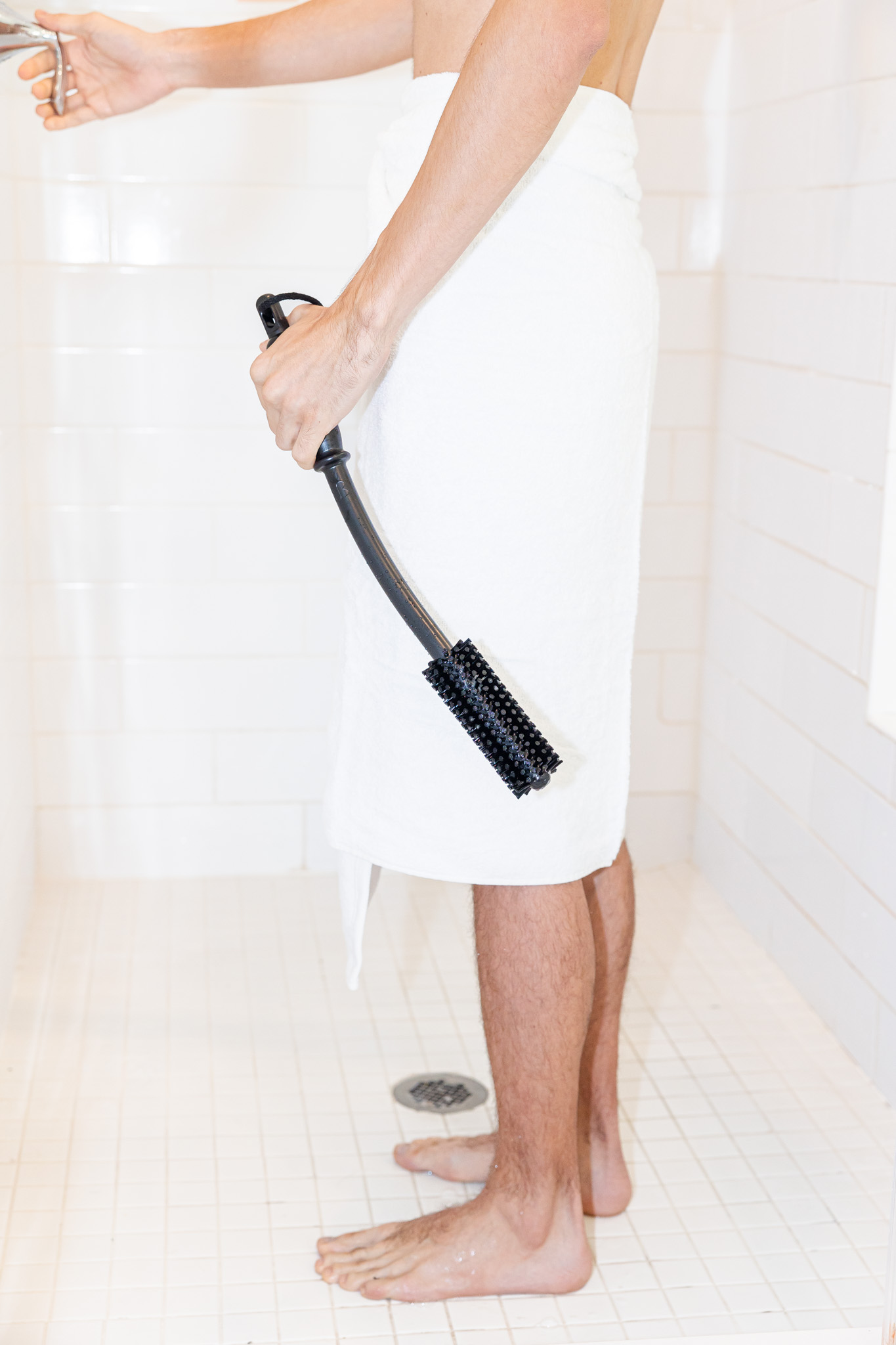
Long-handle brushes for extended reach
A long handle can help reach the back, calves, and feet with less bending. However, extra length can also make a brush harder to control if it is heavy or flexible. Choose the shortest handle that solves the person’s actual reach problem.
Check whether the handle can be stored safely and whether its length makes it awkward in a small shower. Reach is useful only when it comes with control.
Curved and angled handles for easier control
A curve or angle can place the bristles against the body without forcing the wrist into an uncomfortable position. This may be helpful for someone with limited shoulder movement or stiff hands. The best shape is the one that follows a natural arm motion.
Try to imagine the brush being used with wet hands. A clever angle is less helpful if it causes the tool to rotate or slip during washing.
Lightweight models for reduced hand strength
Weight becomes more noticeable when a brush is held away from the body. A lightweight model may reduce fatigue and make repeated strokes easier. It should still feel balanced, with no heavy head pulling the handle downward.
For someone with limited strength, compare the dry weight and the likely feel once water and soap are added. A simpler brush may be more useful than one with extra parts.
Brushes with nonslip grips
A textured or cushioned grip can make the handle easier to hold when hands are wet. Look for a shape that fits the user’s hand without requiring a tight squeeze. A secure, relaxed grip can improve control and reduce hand fatigue.
The grip should remain useful with soap on the fingers. If possible, test whether the user can pick up, turn, and set down the brush without assistance.
Select safe and comfortable bristles
Bristles should match the person’s skin and the purpose of the brush. Stronger is not automatically cleaner, and scrubbing should never leave lasting redness or soreness. Begin gently, then adjust only if the skin remains comfortable.
Soft bristles for sensitive or fragile skin
Soft bristles are often the more comfortable starting point for thin, dry, or easily irritated skin. They can spread cleanser without requiring force. Use light strokes and avoid repeatedly brushing the same patch.
Skin may be more sensitive on the shins, ankles, and areas affected by dryness. Stop if burning, stinging, bleeding, or persistent redness appears.
Firm bristles for gentle exfoliation
Some people prefer firmer bristles for occasional exfoliation, but they should still be used lightly. Exfoliation is not necessary at every shower, and vigorous scrubbing can worsen dryness. Avoid firm bristles over fragile skin, rashes, bruises, or healing areas.
A brush intended for exfoliation should be treated as a targeted option, not a requirement for feeling clean. Comfort remains the better measure of whether it belongs in the routine.
Sponge and silicone alternatives
A sponge may feel softer and more forgiving than traditional bristles. Silicone surfaces can also be easy to rinse and may suit people who dislike a scratchy texture. Compare how each material feels when wet, soapy, and held for several minutes.
Texture is personal. A material that feels gentle to one person may feel unpleasant to another, so choose based on the user’s actual response rather than appearance.
Avoiding irritation, scratches, and pressure
Use enough cleanser and water to reduce drag, and let the brush glide rather than press. Do not use it on broken skin unless a healthcare professional has advised that it is appropriate. A clean brush and short, gentle sessions are usually more comfortable than forceful scrubbing.
Watch the skin after bathing, not only during it. New tenderness, persistent redness, or small scratches suggests that the texture, pressure, or frequency should change.
Look for senior-friendly features
Small design details can determine whether a brush is used comfortably or left in a drawer. Consider storage, cleaning, grip, and replacement before buying. Booty Brush makes high-quality personal hygiene products with an emphasis on accessible, effective daily routines, so ease of use is a useful standard to keep in mind.

Easy-to-hold handles and grip styles
A handle should suit the user’s hand size and strength. Wide, padded, or textured sections may be easier to hold than a narrow, smooth shaft. The user should be able to maintain control without clenching.
If hand pain or tremors are present, consider whether a strap or larger grip would make the brush easier to steady. Any added feature should simplify handling rather than create another adjustment.
Adjustable or detachable components
An adjustable handle may allow different users to find a comfortable length. Detachable heads can make storage and replacement simpler, provided the connection is secure. Avoid parts that are difficult to align or that loosen during use.
Fewer components can be preferable for someone who has reduced dexterity. Read the care instructions before choosing a design with several removable pieces.
Hanging loops and quick-drying materials
A hanging loop gives the brush a clear storage place and helps keep it off a wet ledge. Materials that dry quickly may be easier to keep fresh between showers. Storage should allow air to circulate rather than trapping the brush in a closed container.
A useful routine is to rinse the brush, shake off excess water, and hang it where it can dry fully. This also makes it easier to notice wear.
Simple controls and low-maintenance construction
Most shower brushes do not need complicated controls. If a powered model is being considered, make sure buttons are easy to identify and operate with wet hands, and follow all electrical safety instructions. For many users, a simple manual brush is easier to clean and store.
The best design is one the user can manage consistently. A feature has value only when it improves comfort or access without adding confusion.
Match the shower brush to individual needs
There is no single best brush for every older adult. The choice should reflect hand function, balance, skin condition, and whether another person helps with bathing. A short trial with close attention to comfort is often more informative than a long list of features.
Arthritis, tremors, and reduced dexterity
Arthritis can make a narrow handle painful to grip, while tremors may make a long or top-heavy brush difficult to control. Look for a balanced tool with a broad, nonslip surface and minimal assembly. The user should be able to hold it without sharply bending the fingers.
If the brush repeatedly slips or causes hand pain, stop using it and reconsider the handle. A caregiver or occupational therapist may suggest an adapted grip or a different bathing method.
Balance concerns and fall-risk considerations
A shower brush should be used only when the person can remain stable. Do not reach for a distant body area if doing so causes swaying, and never hold the brush as though it were a grab bar. A seated shower arrangement may be more appropriate for someone who tires easily.
Keep the floor clear and place the brush where it can be reached without stepping across a wet surface. Bathing equipment should support balance rather than compete with it.
Dry skin, eczema, and other skin sensitivities
Dry or eczema-prone skin may respond poorly to rough textures, hot water, and frequent scrubbing. A soft surface, brief washing, and a gentle cleanser may be more comfortable than exfoliation. Follow any care plan provided by a clinician for diagnosed skin conditions.
Do not brush over an active flare, open area, or infected-looking skin unless instructed to do so. A towel or hand may be the gentler option for a particular area.
Assistance from caregivers or family members
A caregiver can help compare handles, check the skin, and make sure the brush is stored hygienically. The user should still be included in the decision, since comfort and dignity matter. Explain each step before assisting and allow the person to do whatever parts are safe.
It can help to agree on a simple routine: where the brush is kept, which areas it is used on, and what signs mean it should be set aside. Clear expectations reduce rushed movements.
Use and maintain a shower brush safely
Safe use depends as much on technique and upkeep as on the original purchase. Start with short sessions and gentle pressure, then observe how the skin and hands feel afterward. A brush should support a steady routine, not create extra strain.
How to hold and move the brush
Hold the handle with a relaxed grip and keep movements slow and controlled. Use short strokes over the skin rather than forceful back-and-forth scrubbing. If reaching an area requires twisting or leaning, change position or ask for help.
These habits can make the routine more predictable:
Rinse the skin and brush before applying cleanser.
Use light pressure, especially over bony or sensitive areas.
Keep both feet or the seated position stable while reaching.
Stop when the skin feels sore, hot, or unusually irritated.
This approach keeps the brush focused on washing instead of turning it into a balance or endurance challenge.
Cleaning and drying the brush between uses
Rinse away soap and loosened skin after each use. Shake off excess water and place the brush where air can reach the head and handle. Follow the manufacturer’s cleaning directions, especially if the brush has detachable parts.
Do not share a brush without cleaning it thoroughly, and avoid storing it in a damp, sealed space. A brush that stays wet for long periods may develop an unpleasant odor or visible buildup.
When to replace the head or entire brush
Replace the brush when bristles become bent, rough, loose, or difficult to clean. Cracks, splitting, persistent odor, or a loose handle are also reasons to stop using it. If the head is replaceable, confirm that the replacement fits securely.
Inspect the brush regularly rather than waiting for a problem during a shower. Prompt replacement protects comfort and makes the tool easier to control.
Situations that require medical or caregiver guidance
Ask for guidance if the person has fragile skin, reduced sensation, wounds, recurring rashes, or difficulty staying upright. A clinician can advise whether brushing is suitable for a particular condition. A caregiver or occupational therapist can also help adapt the routine and reduce unnecessary reaching.
When in doubt, choose the gentlest option and pause use until the concern is clearer. Cleanliness matters, but safe and comfortable bathing comes first.
Conclusion
Choosing a shower brush for seniors is mainly about matching the tool to the person. A manageable handle, comfortable texture, secure grip, and safe routine can make everyday bathing feel more accessible while preserving dignity and confidence.
Frequently Asked Questions
What is the best shower brush for seniors?
The best brush is one that the user can hold, control, and clean comfortably. Consider reach, weight, grip, texture, skin sensitivity, and balance together.
Is a long-handle brush safer for older adults?
It can reduce bending and stretching, but extra length may make control harder. Choose a handle long enough to solve the reach problem without becoming unwieldy.
Should seniors use soft or firm bristles?
Soft bristles are usually a gentler starting point, especially for dry or fragile skin. Firm bristles should be used lightly and avoided over irritated or damaged areas.
Can a shower brush help someone with arthritis?
A broad, nonslip, lightweight handle may be easier to manage than a narrow one. Stop if gripping causes pain and consider advice from an occupational therapist.
How often should a shower brush be cleaned?
Rinse it after every use, remove excess water, and let it dry fully in an airy place. Follow any specific care instructions for the material and construction.
When should a shower brush be replaced?
Replace it when the bristles are worn, rough, loose, or difficult to clean. Cracks, persistent odor, or a loose connection also indicate that it is time for a new brush.
Can someone use a shower brush if they have balance problems?
Only if they can remain stable while using it. A brush is not a support device, so seated bathing, supervision, or professional advice may be safer when balance is limited.
