

Antifungal Shower Brushes: What the Claims Do and Do Not Mean
Searching for an “antifungal shower brush” can bring up products with very different claims. A brush is a washing tool. A label or search phrase does not establish that it prevents or treats a fungal infection.
Antimicrobial bristles are not a treatment claim
Booty Brush's bristles are described as antimicrobial. That feature should not be interpreted as evidence that the brush treats athlete's foot, ringworm, or another skin infection. It also does not establish effectiveness against a specific fungus or make the brush sterile.
For a suspected infection, get advice about the appropriate treatment. Do not replace prescribed care with a brush, stronger scrubbing, or a product whose treatment claims are unclear.
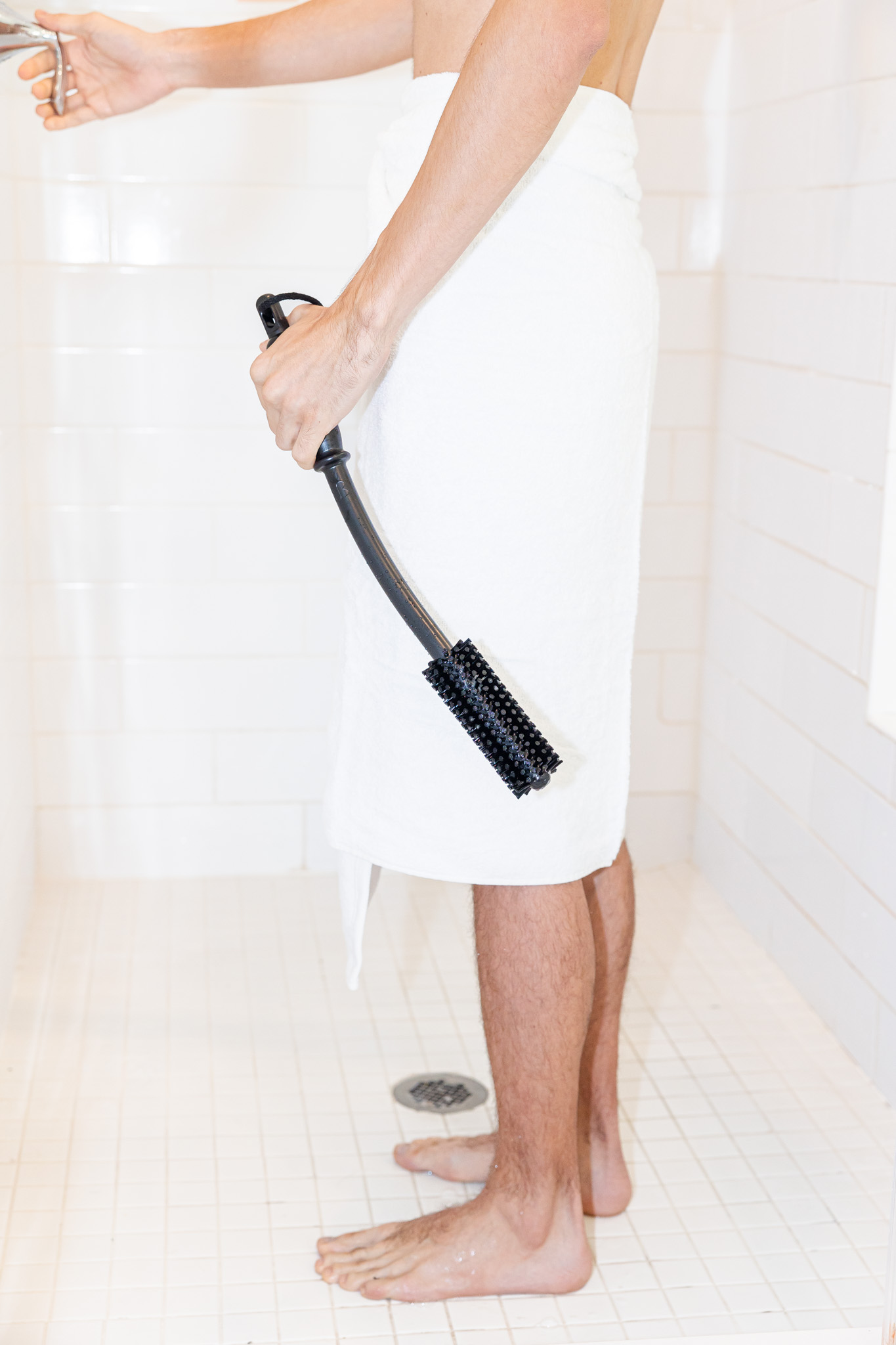
Keep brushing away from a rash
Do not brush an active or suspected fungal rash, broken skin, or a painful area. A bath accessory cannot tell you what is causing symptoms. Stop brushing and seek advice if a rash persists, spreads, becomes painful, or produces discharge.
The CDC's ringworm guidance describes ringworm as a fungal infection and explains its treatment and prevention. Keeping skin clean and dry is part of care; scrubbing is not a substitute for an appropriate antifungal treatment.
Choose a brush for ordinary shower washing
If a brush suits your intact skin, compare reach, grip, bristle feel, and how easily you can rinse it. A longer handle is useful only when you can control it without leaning or forcing a stretch.
Booty Brush has an 18-inch curved design, an all-around grip, and Soft or Medium bristles. It is intended for external shower washing of the buttocks and other hard-to-reach body areas. Never insert it into the body.
Choose by comfort rather than assuming a firmer brush cleans better. A brush may be too irritating even when labeled soft. See our Soft versus Medium comparison.
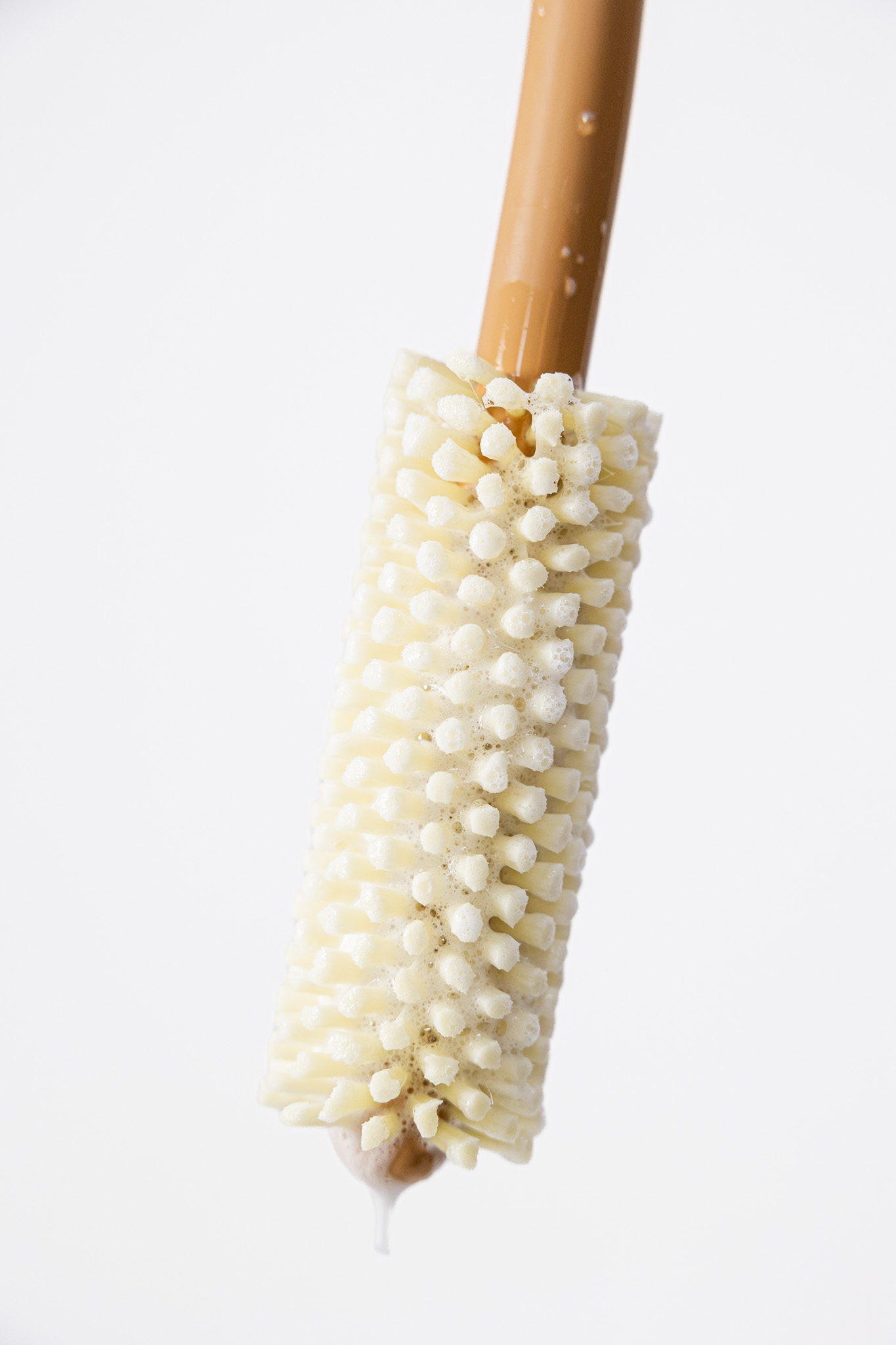
Care for the brush after every use
- Rinse away cleanser and visible residue.
- Follow its cleaning instructions, including any approved deeper-cleaning method.
- Remove excess water and leave the head exposed to airflow.
- Keep the brush personal and store it separately from other people's tools.
- Check for damaged bristles, cracks, visible mold, or persistent residue and odor.
Do not improvise with boiling water, bleach, or harsh chemicals unless the brush's care directions permit the method. If it has contacted an infected area, set it aside and ask about appropriate cleaning or replacement before reuse.
Frequently asked questions
Can Booty Brush cure a fungal infection?
No. It is a shower hygiene tool, not an antifungal medicine.
Does antimicrobial mean antifungal?
Do not infer a specific antifungal effect from a general antimicrobial description. The exact claim would need supporting product evidence.
Should I brush over athlete's foot or another rash?
No. Avoid brushing the affected area and follow appropriate treatment advice.
Can I share an antimicrobial brush?
Keep it for one person. The antimicrobial description does not remove the need for personal use, cleaning, and drying.
How often should I replace it?
Follow its instructions and condition rather than a universal calendar. Replace a damaged brush or one that cannot be cleaned properly.
