

Choosing a Shower Brush for Sensitive Skin: Comfort and Care
Key Takeaways
A sensitive-skin shower brush should make cleansing easier, not leave skin tight or sore. Start gently, watch how your skin responds, and keep the brush clean.
- Choose soft, flexible materials and avoid harsh textures.
- Use lukewarm water, light pressure, and short sessions.
- Skip brushing over broken, inflamed, or actively irritated skin.
Understand what makes skin sensitive in the shower
Sensitive skin can react to friction, heat, cleansers, and frequent exfoliation. A brush adds another source of contact, so even a soft tool may feel irritating when used too firmly. The goal is comfortable cleansing rather than trying to polish the skin. Pay attention to what your skin tells you during and after the shower.
Common signs of irritation and over-exfoliation
Irritation may appear as stinging, persistent redness, itching, warmth, or a tight feeling after rinsing. Small rough patches can also become more noticeable when the outer barrier is repeatedly disturbed. If skin feels tender the next day, the brush may be too abrasive, the session may be too long, or both. Pause brushing until the area feels calm again.
How water temperature affects the skin barrier
Very hot water can strip away some of the skin’s protective oils and make dryness feel worse. Lukewarm water is usually a more comfortable starting point, especially when the skin is already reactive. Keep the shower reasonably short, and avoid turning up the heat to compensate for a cold bathroom. A gentler temperature also makes it easier to use less pressure with the brush.
When a shower brush may not be suitable
Do not brush over cuts, sunburn, rashes, open sores, or areas that are actively inflamed. A brush may also be the wrong tool during an eczema flare or when a clinician has advised avoiding friction. For recurring redness, cracking, or painful irritation, ask a healthcare professional for individual guidance. Sensitive-skin care is not a test of toughness, and skipping the brush is a sensible choice when skin needs rest.
Choose the right sensitive-skin shower brush
Material and design matter more than a promise of intense exfoliation. Look for a head that bends slightly, feels smooth against the hand, and can be cleaned thoroughly. The best sensitive-skin shower brush is one you can control without stretching, pressing, or repeatedly passing over the same area.
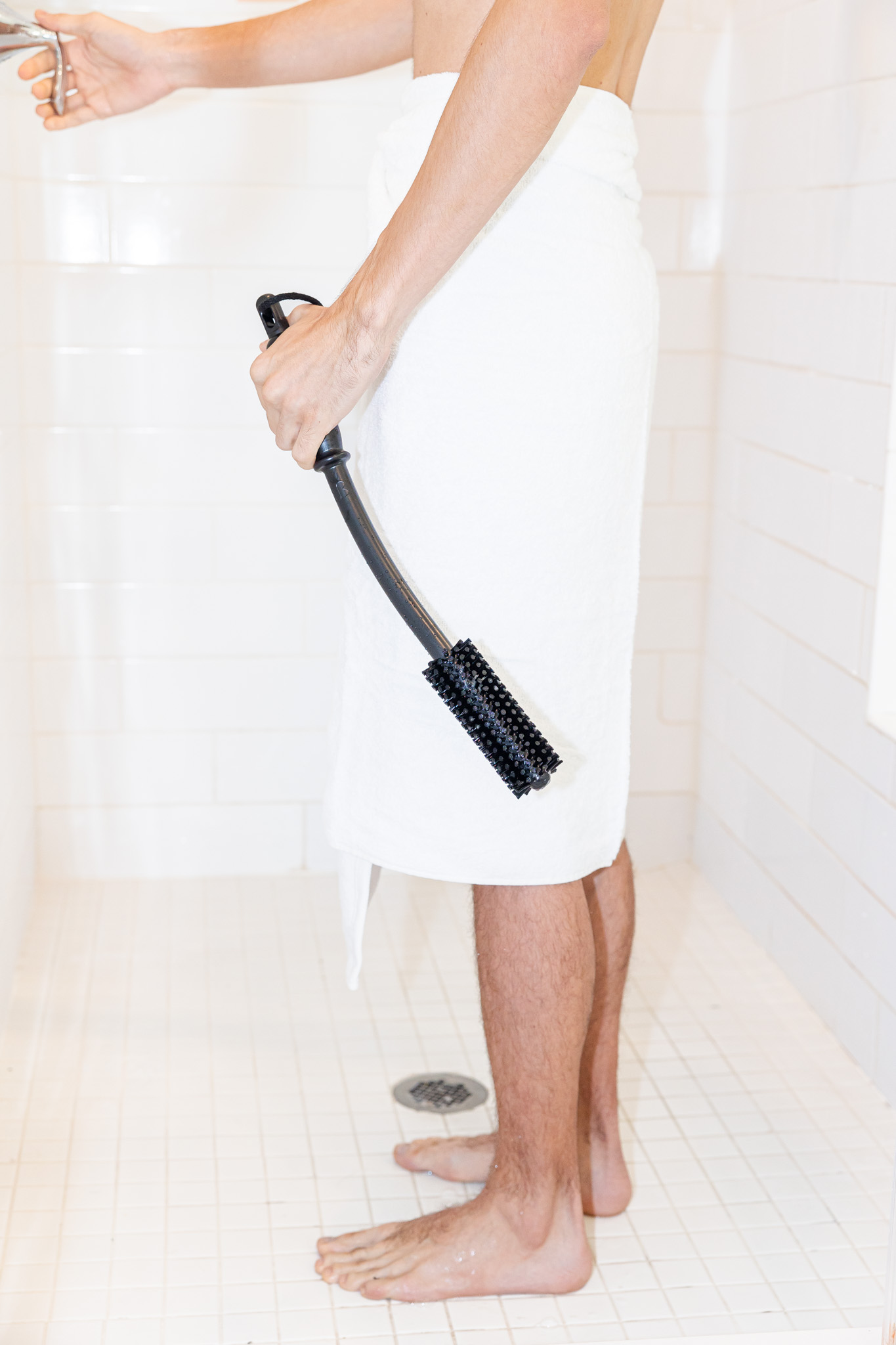
Comparing soft nylon bristle and fabric materials
Bristle and fabric textures vary, and neither is automatically suitable for sensitive skin. Booty Brush is a shower tool; use it wet as directed rather than applying dry-brushing instructions.
Evaluating bristle density, texture, and flexibility
Dense, stiff, or sharply textured bristles create more friction and are less forgiving on reactive skin. Choose rounded tips, a low-to-moderate density, and enough flexibility for the head to follow the body’s shape. Test the brush on your palm first; if it feels scratchy there, it will probably feel worse on wet skin. Soft contact matters more than aggressive exfoliation when comfort is the priority.
Selecting a brush with a comfortable handle and grip
A secure handle helps you clean with a relaxed hand instead of squeezing and pressing harder. Look for a non-slip surface, a manageable length, and a shape that works with your reach. A long handle can be useful for the back, but it should not feel unwieldy around smaller areas. Booty Brush creates high-quality personal hygiene products with soft nylon bristles, designed to make daily routines more accessible and effective, so comfort and ease belong in the selection process too.
Match the brush to your skin type and needs
The same brush will not suit every body or every day. Dryness, sensitivity, body hair, mobility, and the location being cleaned all affect how much contact is practical. Start with the least intense option and adjust only if your skin remains comfortable over time.
Selecting options for hard-to-reach areas
A longer handle or flexible head can make the back and legs easier to reach without twisting or overextending. Still, reach should not come at the cost of control. Choose a grip that stays steady when wet, and use smaller movements around joints and bony areas. If you cannot control the brush comfortably, ask for help or use your hands instead.
Use a sensitive-skin shower brush safely
Technique is what turns a potentially abrasive tool into a manageable part of a shower routine. Wet the skin and brush, use a small amount of cleanser, and let the tool glide rather than drag. Begin with one area and assess the sensation before continuing.
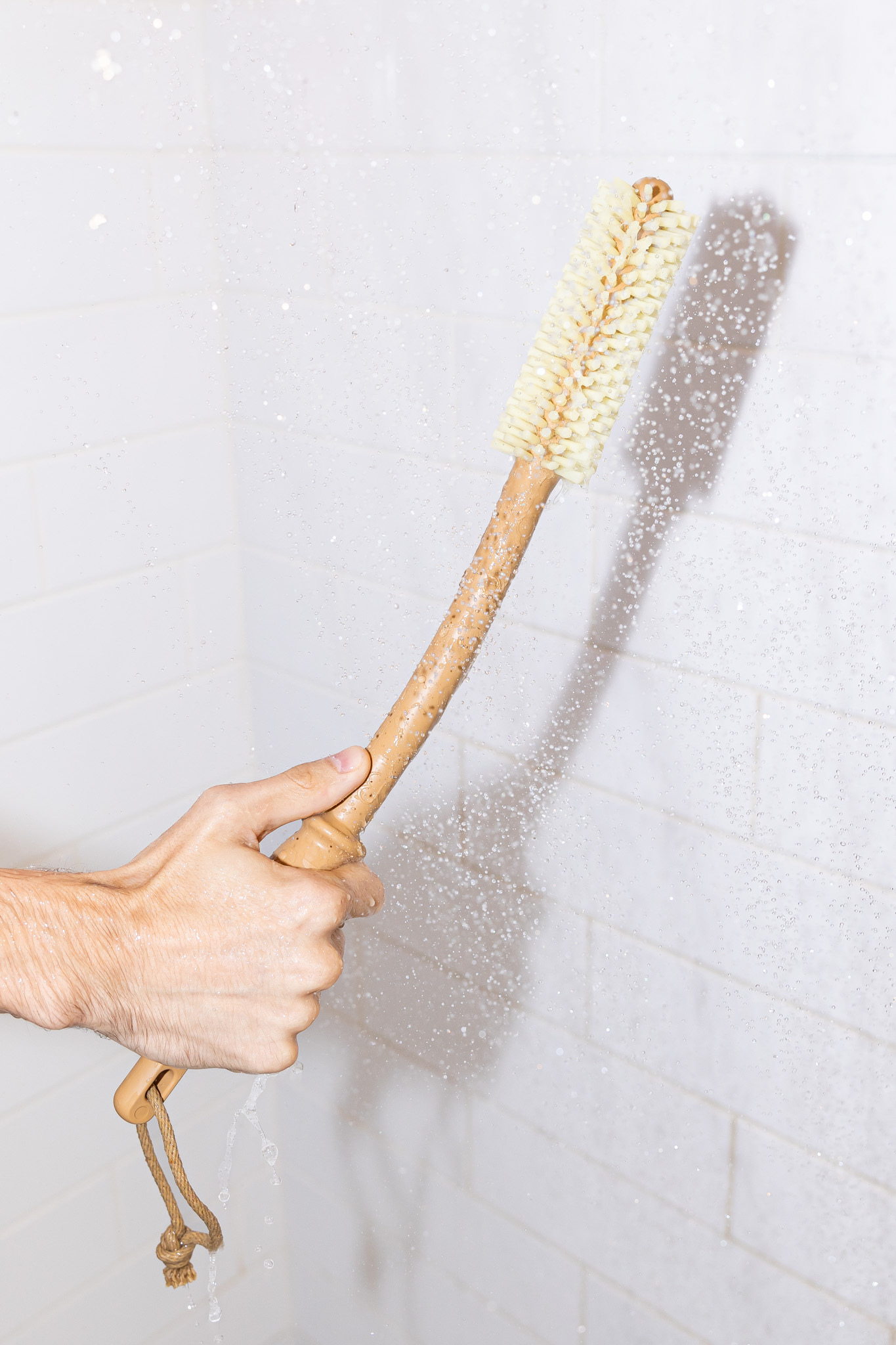
How much pressure and time to use
Use only enough pressure to maintain contact with the skin. A brief pass over each area is generally more appropriate than repeated scrubbing, especially when you are learning how the brush feels. Keep the first few sessions short and stop if there is stinging, heat, or discomfort. A useful sequence is:
- Wet the skin and brush with lukewarm water.
- Apply a mild, fragrance-free cleanser.
- Glide lightly over a small area for a short time.
- Rinse the skin and check for lingering irritation.
This approach makes it easier to identify whether the problem is the brush, the cleanser, the pressure, or the frequency. If skin stays comfortable, you can gradually establish a simple routine without making each shower an exfoliation session.
How often to brush different areas of the body
There is no universal brushing frequency for sensitive skin. You may be more comfortable without a brush; stop if brushing leads to irritation during use or afterward.
Why gentle, short strokes are better than scrubbing
Short strokes limit the amount of friction placed on one spot and make pressure easier to control. Scrubbing back and forth can create heat and redness before you realize the skin is uncomfortable. Move slowly over a small area, rinse, and leave the skin alone if it feels tender. The brush should support cleansing, not become a substitute for careful observation.
Build a soothing shower routine
A brush is only one part of the experience. Water, cleanser, towel technique, and moisturizer can either support the skin barrier or add to its workload. Keeping the rest of the routine simple gives you a clearer sense of what your skin tolerates.
Pairing the brush with a fragrance-free cleanser
Choose a cleanser labeled fragrance-free if scents tend to trigger dryness or irritation. Use enough to reduce drag, but do not assume more lather means cleaner skin. Apply the product to the brush or skin, glide lightly, and rinse thoroughly. Booty Brush is designed around personal hygiene, comfort, and confidence, which fits a routine that cleans effectively without making the skin feel stripped.
Applying moisturizer while the skin is still damp
Apply a plain moisturizer within a few minutes of stepping out, while the skin still holds some water. This helps reduce the dry, tight feeling that can follow bathing. Focus on areas that feel rough, and use a lighter layer if the product tends to feel uncomfortable. If a moisturizer burns or causes a rash, discontinue it and seek professional advice.
Clean and replace the brush properly
Follow this Booty Brush cleaning protocol after every use to keep the nylon bristles fresh, comfortable, and ready for the next shower. Consistent care helps prevent cleanser residue, skin debris, and trapped moisture from collecting on the brush.
Booty Brush cleaning protocol after each use
- Rinse the Booty Brush thoroughly under clean, lukewarm running water, working the water through the nylon bristles until all cleanser and loosened debris are removed.
- Gently shake out excess water.
- Place the Booty Brush in a clean, well-ventilated area and allow it to air-dry completely before storing or using it again.
Deep-cleaning and storing the Booty Brush
Give the brush a more thorough wash regularly and whenever product buildup is visible. Use warm water and a small amount of mild soap, work it through the nylon bristles, rinse until no soap remains, and allow the brush to air-dry completely. Follow any additional care directions supplied with your Booty Brush, and keep the brush for one person. Keep the storage area clean and dry so the brush does not pick up residue after it has been washed.
Knowing when to replace or stop using the brush
Replace the Booty Brush when the nylon bristles become rough, loose, bent, or misshapen, or when an odor remains after cleaning. Stop using it sooner if it causes repeated redness, stinging, or soreness. Do not try to trim damaged bristles or continue using a brush that is difficult to clean. Booty Brush emphasizes effective, comfortable personal hygiene for every body, and a worn tool no longer supports that purpose.
Conclusion
Choosing a sensitive-skin shower brush is mostly about reducing friction and keeping the routine predictable. Select a soft, controllable tool, use it briefly with lukewarm water, and moisturize afterward. When your skin feels irritated, pause and return to gentler cleansing until it recovers.
Frequently Asked Questions
Is a shower brush good for sensitive skin?
Not always. Soft bristles can still irritate sensitive skin. The right choice may be gentle hand washing rather than a brush.
How often should sensitive skin be brushed?
There is no required schedule. Sensitive skin may not tolerate brushing, even occasionally. Choose a gentler method and ask a dermatologist if you are unsure.
Should I use a shower brush on dry skin?
A wet shower brush and dry brushing are different practices. For sensitive skin, avoid assuming that dry brushing is appropriate; follow the tool’s instructions and stop if it feels abrasive.
What water temperature is best for sensitive skin?
Lukewarm water is generally a better choice than very hot water. Hot showers can leave skin feeling drier and more uncomfortable.
Can I use a shower brush during an eczema flare?
It is usually safer to avoid added friction over actively inflamed, cracked, or painful skin. Follow your healthcare professional’s advice for managing a flare.
Should I apply moisturizer after brushing?
Yes, applying moisturizer while skin is still slightly damp can help reduce post-shower dryness. Choose a product your skin already tolerates well.
How do I know when to replace a shower brush?
Replace it when the head is damaged, rough, misshapen, persistently odorous, or difficult to clean. Stop sooner if it repeatedly irritates your skin.
View Booty Brush and its available bristle options to compare its design with your shower routine.
