

How to clean your butt properly: A safe, simple guide
Key Takeaways
Cleaning your butt properly is mostly about being gentle, consistent, and paying attention to how your skin feels.
- Clean the outside of the anus and surrounding skin; routine internal cleaning is usually unnecessary.
- Use lukewarm water and gentle external cleansing; a brush is not required.
- Wipe gently from front to back, then rinse or wash when needed.
Understand what clean means for your butt
Good anal hygiene does not mean making the area feel stripped, dry, or scrubbed raw. It means removing stool and sweat from the external skin while protecting the natural barrier that helps prevent irritation. The most comfortable routine is usually simple enough to repeat without discomfort. If you are learning how to clean your butt properly, start with the outside and use the least force necessary.
The difference between external and internal cleaning
External cleaning means washing the skin around the anus, the inner buttocks, and nearby areas where stool or sweat may collect. Internal cleaning means putting water or another product into the anal canal, which is a different practice and is not needed for ordinary daily hygiene. After cleaning, washing your hands is part of the routine too. A general anal hygiene overview can help clarify the distinction between post-bowel-movement cleansing and internal rinsing.
Why overcleaning can cause irritation
The skin around the anus is sensitive, and repeated friction can create tiny areas of inflammation even when you are trying to be thorough. Strong soaps, alcohol-based products, rough cloths, and aggressive wiping may remove protective oils and leave the area burning or itchy. More cleaning is not always better; less friction is often kinder to the skin. If a product stings, stop using it rather than trying to wash the sensation away.
How often you need to wash
Rinse or wipe after a bowel movement, and wash the external area during your usual shower or bath. You may want an additional rinse after heavy sweating, diarrhea, or exercise, but there is no need to repeatedly wash throughout the day when the area is already clean. Your routine can be adjusted for your body, activity level, and bowel habits. Comfort and clean skin matter more than a fixed number of washes.
Signs your routine may be too harsh
Soreness, persistent dryness, redness, burning, or itching can indicate that your routine is doing too much. These symptoms may also have causes unrelated to hygiene, so do not assume that more washing will solve them. Take a break from fragranced products and scrubbing, then use lukewarm water and gentle drying. If symptoms continue, speak with a healthcare professional.
Gather the right supplies
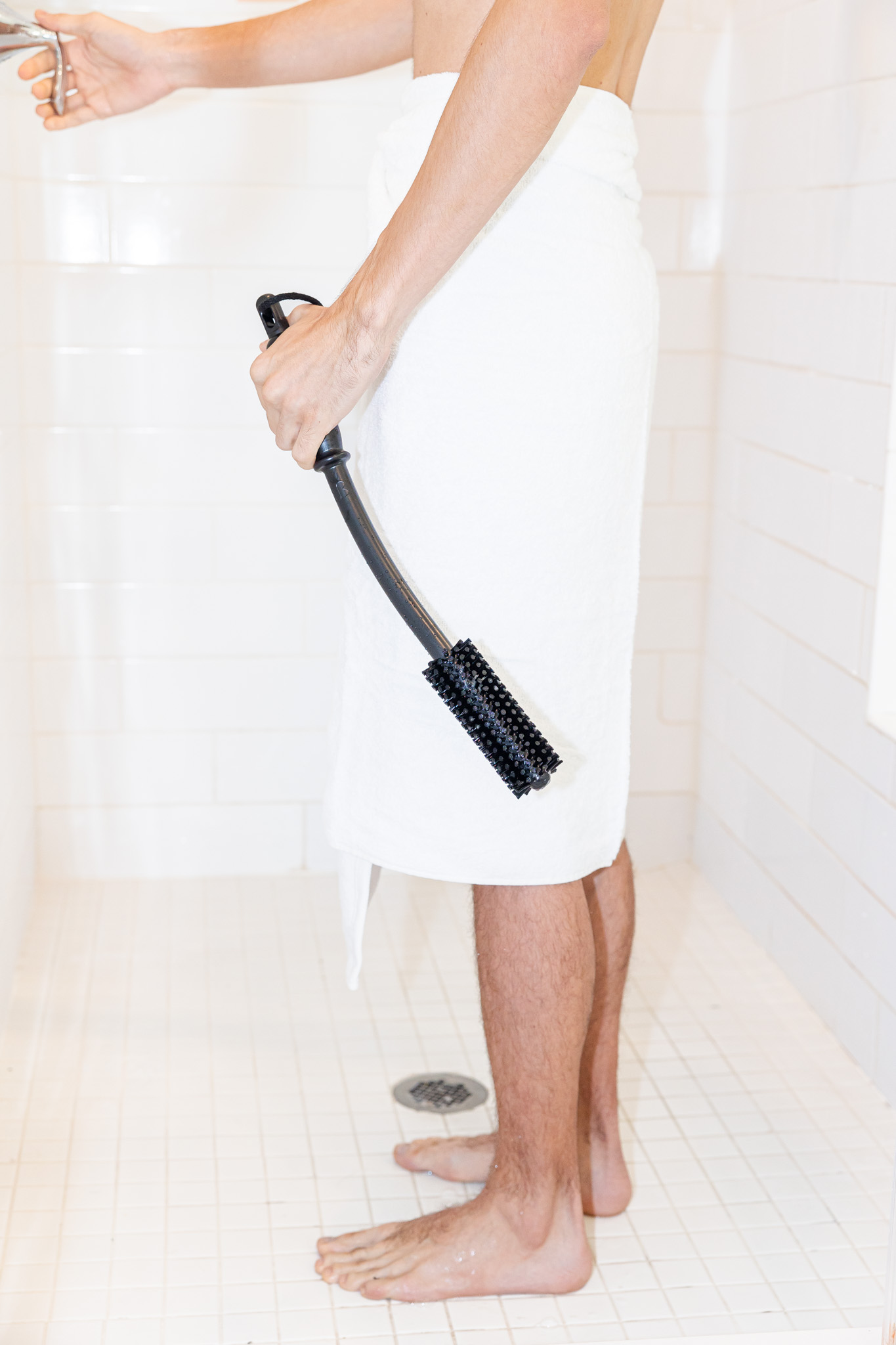
Choose clean, gentle supplies you can use comfortably. Booty Brush is an optional shower reach tool, not a requirement for cleaning after a bowel movement.
.png)
Fragrance-free soap and lukewarm water
Lukewarm water can loosen residue without the shock of very hot or cold water. If you use soap, choose a mild, fragrance-free cleanser and keep it on the external skin rather than inside the anus. Rinse thoroughly so no cleanser remains in skin folds. Plain water is also a reasonable option if soap causes dryness or stinging.
When a bidet may make cleaning easier
A bidet can rinse the external area with water and may be helpful if wiping is uncomfortable or leaves residue. Start with low pressure and a comfortable temperature, then pat dry rather than rubbing. Water is not automatically gentler if it is forceful or very hot. For more background on water-based options, see this guide to cleaning without paper.
For a quick comparison, consider what each supply is best suited to do:
| Supply | Useful for | Main consideration |
|---|---|---|
| Soft toilet paper | Initial wiping | Use light pressure |
| Lukewarm water | Rinsing residue | Keep pressure moderate |
| Mild fragrance-free cleanser | External shower washing | Rinse it away fully |
| Soft washcloth | Gentle external washing | Wash and dry after use |
No single item is essential for everyone. The best setup is the one that leaves the skin clean, comfortable, and dry without adding extra steps or irritation.
Products and ingredients to avoid
Avoid scented soaps, deodorizing sprays, harsh scrubs, and products that contain alcohol or strong antiseptics unless a clinician has specifically recommended them. Do not use household cleaners or put cosmetics on the anal opening. Pre-moistened wipes can irritate some people, especially when fragranced; if you use one, choose an unscented option and stop if it burns. Booty Brush’s broader emphasis on accessible personal hygiene is a useful reminder that a routine should feel practical, not punishing.
Follow a gentle step-by-step cleaning routine
A calm sequence makes cleaning easier and helps prevent the repeated wiping that often causes soreness. Move from the least soiled area toward the more soiled area, use water when paper is not enough, and keep every motion light. You do not need to scrub until the skin feels squeaky. Clean hands and clean materials are just as important as the cleaning motion itself.
Rinse the external area thoroughly
When water is available, let it flow over the external area and inner buttocks to loosen any remaining residue. A bidet, handheld shower, or clean cup can work, provided the stream is comfortable and the equipment is clean. Rinse away any soap rather than leaving a film behind. A practical wiping and rinsing guide offers another overview of these basic steps.
Wash without scrubbing inside the anus
Use your fingertips or a soft cloth only on the external skin, with a mild cleanser if you need one. There is no need to insert a finger, brush, cloth, or nozzle for ordinary washing. Scrubbing inside can irritate delicate tissue and may make you feel less comfortable afterward. Booty Brush is centered on personal hygiene products for daily comfort; it should not be taken as a reason to insert a brush or cleaning tool into the anus.
A short routine is usually enough:
- Wipe gently or rinse after a bowel movement.
- Wash the external skin during a shower or bath.
- Rinse away cleanser and check that no residue remains.
- Pat the area dry with a clean towel.
Once those steps are complete, leave the skin alone. Repeating them several more times rarely improves cleanliness and may increase irritation.
Pat the skin dry instead of rubbing
Moisture left in skin folds can feel uncomfortable, but vigorous drying creates friction of its own. Use a clean towel and press or pat gently until the area is dry. If practical, allow a short period of air-drying before getting dressed. Avoid applying powder, fragrance, or deodorant to cover remaining moisture.
Clean after bowel movements
The right after-toilet routine depends on the stool, your skin, and what supplies are available. Dry toilet paper may be sufficient for some bowel movements, while water can make cleanup easier after softer or stickier stool. The goal is a comfortable external clean, not a long cleaning session. If you repeatedly feel unable to get clean, consider whether constipation, diarrhea, or a medical issue is contributing.
How to tell when wiping is complete
Wiping is generally complete when the paper comes away clean enough and there is no obvious residue on the external skin. You do not need to keep wiping until the area feels dry from friction. If the skin begins to sting or look red, switch to water and stop rubbing. A brief rinse followed by gentle drying is often more comfortable than many additional passes.
Avoid putting soap or chemicals inside
Soap, disinfectant, perfume, and other chemicals do not belong inside the anus. Internal tissue is sensitive, and these substances can cause burning or inflammation. Even on the outside, rinse cleanser away completely. If plain water does not solve a persistent problem, the answer may be medical care rather than a stronger chemical.
Prevent odor, itching, and irritation
Odor and itching are not signs that you have failed at hygiene. Sweat, moisture, stool consistency, skin conditions, hemorrhoids, infections, and other health issues can all play a role. Start with breathable clothing and a gentle cleaning routine rather than masking the problem with fragrance. Booty Brush’s focus on comfort and confidence fits this practical approach: feeling fresh should not require hurting your skin.
Symptoms that continue despite gentle cleaning
If you wash with lukewarm water, avoid irritants, dry carefully, and still feel uncomfortable, cleaning is probably not the whole answer. Write down when symptoms occur and whether bowel movements, foods, exercise, or products seem connected. Bring that information to a clinician. The safest next step is targeted advice, not increasingly aggressive hygiene.
Conclusion
A clean, comfortable butt usually comes from gentle external washing, sensible wiping, careful drying, and avoiding products that irritate sensitive skin. Start with a simple routine, adjust it to your body, and seek medical advice when symptoms persist or look unusual.
Frequently Asked Questions
Should I wash inside my anus every day?
No. Everyday hygiene generally involves cleaning the external skin around the anus. Frequent internal rinsing can irritate tissue and is not usually necessary.
Can I use regular scented soap?
Scented soap may irritate sensitive skin. Choose a mild, fragrance-free cleanser for external washing, or use plain lukewarm water if soap causes dryness or stinging.
View Booty Brush and its available bristle options to compare its design with your shower routine.
