

Reusable Bathroom Hygiene Products: Choosing and Caring for Your Tools
Reusable bathroom hygiene tools can serve many washes when you can clean, dry, and store them properly. Choose the item that solves a real need, such as easier reach or a washable cleansing surface. You do not need several scrubbing tools in the same routine.
Compare reusable washing tools
| Tool | Useful feature | Care consideration |
|---|---|---|
| Washcloth | Flexible fabric for areas you can reach | Use a clean cloth and launder after use according to its label. |
| Shower loofah or mesh sponge | Spreads body wash and provides texture | Rinse thoroughly and give the material space to dry. |
| Silicone scrubber | A different texture from fabric or bristles | Clean between projections and inspect for damage. |
| Long-handled body brush | Additional reach for shower washing | Check control, clean the head and grip, and air-dry. |
A jar of exfoliating scrub is a consumable skin-care product, not a reusable tool. Follow its label separately rather than treating it like an accessory that can be rinsed and reused.
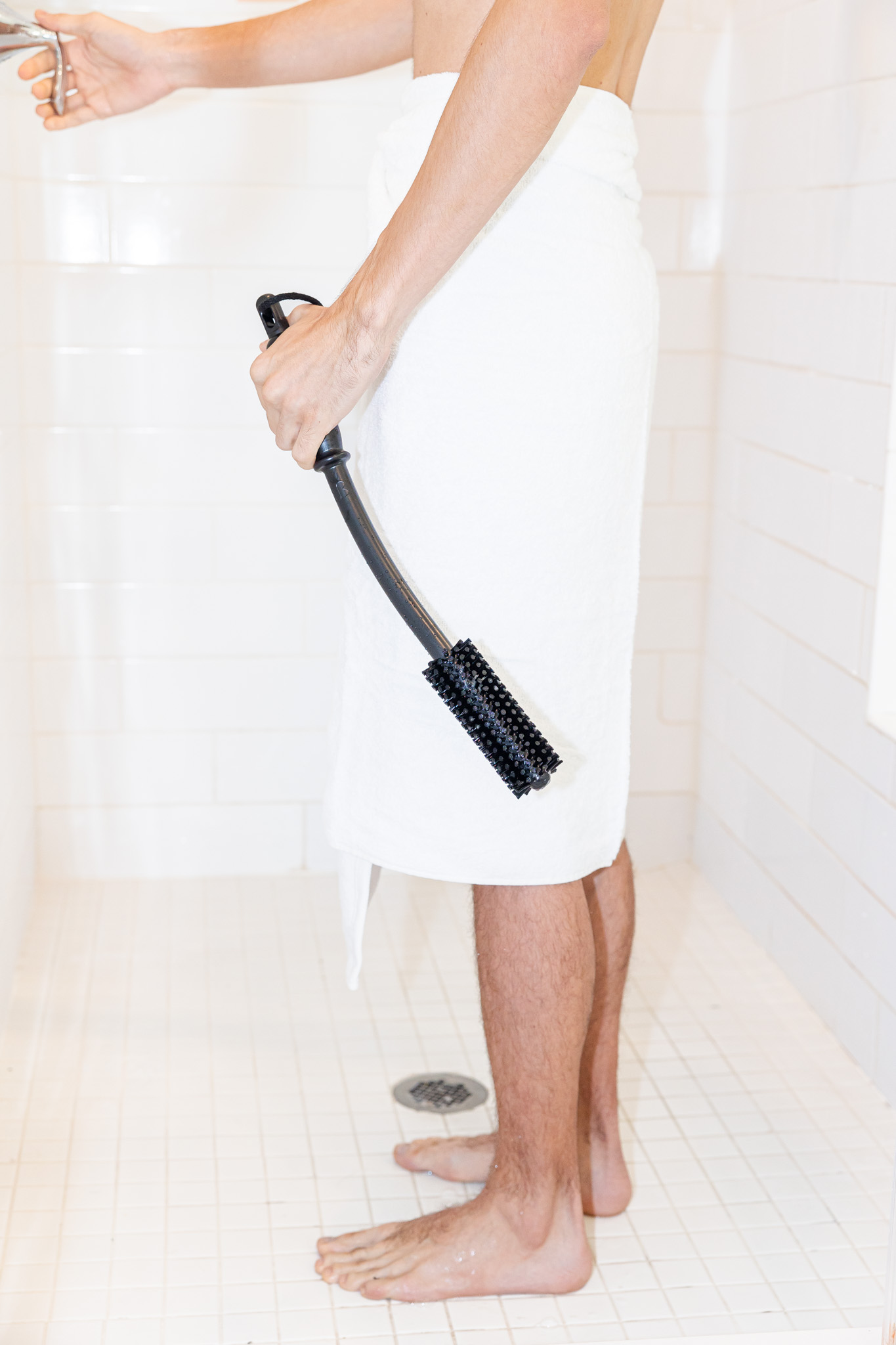
Where Booty Brush fits
Booty Brush is a reusable shower brush with an 18-inch curved design, an all-around grip, and Soft or Medium bristles. It is intended for external washing of the buttocks and other hard-to-reach body areas.
Use gentle contact and keep it outside the body. It is not a toilet-paper holding aid or a household cleaning brush. Its antimicrobial bristle feature does not remove the need to clean and dry it.
Choose by comfort and maintenance
Consider whether you can hold the tool with wet hands, reach the intended area without straining, and rinse every part afterward. No material guarantees comfort for sensitive skin. Stop using a tool that irritates, and use a gentler washing method when needed.
Check the storage space before buying. A useful tool needs an accessible place to dry away from pooled water. A long handle may be helpful in the shower but inconvenient in a small travel bag.
After-use care
- Remove soap and visible residue promptly.
- Clean according to the material's instructions. Fabric usually requires laundering; a brush has its own care directions.
- Remove excess water without damaging the item.
- Allow it to dry completely before enclosed storage.
- Inspect it for damage, buildup, or persistent odor before reuse.
Do not assume a tool is safe for boiling, bleach, or a dishwasher. Use those methods only when its manufacturer permits them. Never mix cleaning chemicals.
Keep clean and used items separate
Keep personal brushes for one person. Use separate washing items for the face and buttocks, and wash your hands after handling a used tool. Personal-care accessories should be stored separately from brushes used on toilets, tile, and drains.
Let a used washcloth dry before leaving it in a hamper; do not reuse it without laundering. When traveling, keep used items separate from clean supplies and unpack damp tools promptly for cleaning and drying.
When replacement makes sense
Replace a brush with sharp, loose, or damaged bristles, a cracked handle, visible mold, or persistent residue or odor that recommended cleaning cannot remove. Wetness immediately after washing is normal. If an item stays damp, first improve its drying location and inspect its condition.
Frequently asked questions
Are reusable tools automatically more hygienic?
No. Their condition and care matter. Choose tools you can maintain consistently.
Can everyone use silicone or soft bristles?
No material suits everyone. Comfort depends on the tool, pressure, skin condition, and individual response.
How should I start?
Choose one tool for the task that is difficult, then decide whether it improves your routine. For reach, read our long-handled brush guide.
