

How to Choose a Shower Brush for Seniors
Choosing a shower brush for seniors starts with a practical question: which parts of washing have become difficult? Reaching the back, holding a slippery handle, or guiding a brush comfortably can each call for a different solution.
The right brush should fit the person's reach, grip, skin comfort, and bathing routine. Here is what to look for when choosing one for yourself or helping a family member.
Key Takeaways
- Choose enough handle length to reach comfortably while keeping control.
- Look for a grip that feels manageable with wet hands.
- Match bristle softness to the person's comfort; firmer scrubbing is not the goal.
- Consider how the brush will be rinsed, dried, and stored.
- Include the person using the brush in the decision.
Start With Reach and Grip
Think about the movements that are difficult during a normal shower. Does reaching require uncomfortable bending? Does a small handle tire the hand? Is the brush awkward to turn around the body?
A long handle may make hard-to-reach areas more accessible, but extra length can also make a brush harder to guide. If possible, try the movement before bathing, from a stable position. The handle should feel useful throughout the motion, not just reach the target.
Check the grip as carefully as the length. Look for a surface and shape that sit comfortably in the hand without requiring a tight squeeze. A textured grip still needs to be kept free of excess soap.
For a closer look at handle shape and control, read our guide to choosing a long-handled bath brush.
Choose a Texture That Feels Comfortable
A brush should not leave skin feeling scratched or sore. Bristle firmness, pressure, and the condition of the skin all matter. An antimicrobial feature does not tell you how soft a brush will feel.
The American Academy of Dermatology recommends gentle, fragrance-free cleansing products and warm rather than hot water in its skin-care guidance for people in their 60s and 70s. Brushing is optional; choose a gentler washing method if a brush is uncomfortable.
Avoid brushing broken or irritated skin. If there are wounds, unusually fragile skin, or ongoing irritation, ask a healthcare professional which cleansing method is appropriate.
Compare Brush Designs
- Long-handled brush: Worth considering when reach is the main difficulty. Check how easy it is to lift, turn, and rinse.
- Handheld brush: May suit easy-to-reach areas, but it still needs a comfortable grip.
- Silicone brush: Compare the actual texture and handle design. The material alone does not guarantee comfort.
- Washcloth: A simple alternative if brushing feels too rough, although it does not provide extra reach on its own.
There is no need to choose the most complicated design. A brush that is easy to pick up, guide, and put away may be more useful than one with several attachments.
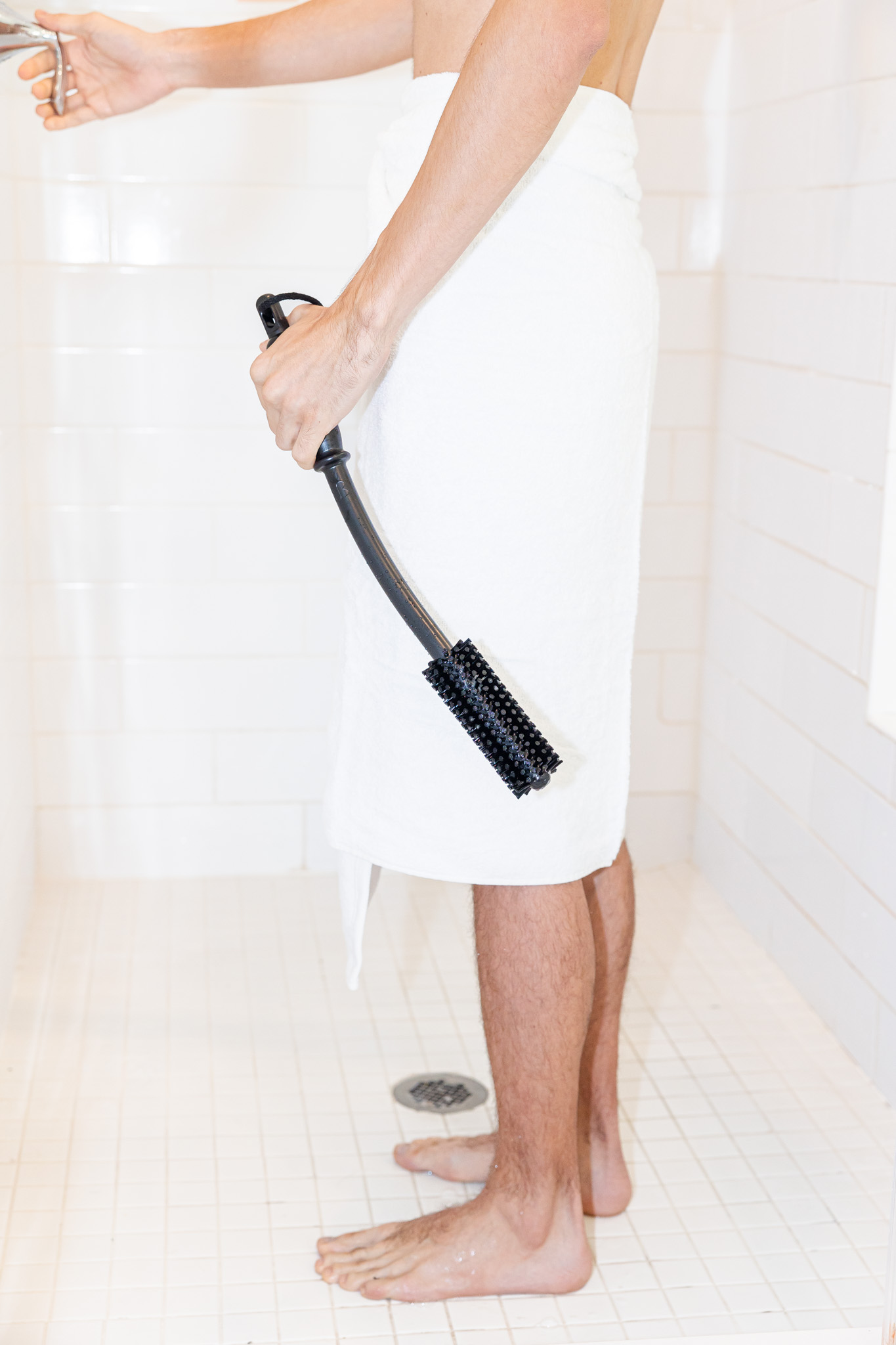
How Booty Brush Fits These Needs
Booty Brush is designed for external cleaning of the buttocks, between the buttocks, and other hard-to-reach body areas in the shower. Its features include:
- An 18-inch curved handle for added reach.
- A textured non-slip grip.
- All-around antimicrobial nylon bristles, with soft and medium options.
- A solid, nonporous plastic body.
Compare those features with the person's own routine. Consider whether the handle is easy to control and which bristle option feels comfortable. The brush is for external use only.
Antimicrobial bristles are a product feature, not a replacement for cleaning and drying the brush. They also do not establish that a brush prevents skin infections or is suitable for every skin condition.
Make the Bathing Setup Work With the Brush
Place the brush, cleanser, and towel where they can be reached comfortably. A brush is a washing tool, not something to lean on for support.
The National Institute on Aging recommends bathroom grab bars and nonskid surfaces in its room-by-room fall-prevention guidance. Use properly installed supports; a towel rail is not a grab bar.
If standing is difficult, discuss suitable shower seating and assistance with an occupational therapist or another qualified professional. The whole setup matters, including getting into and out of the shower.
When a caregiver helps, agree on which tasks the person wants to manage and where help is welcome. Ask about pressure and comfort, explain what you are doing, and respect privacy throughout.
Rinse, Dry, and Inspect After Use
Follow the brush's care instructions. Rinse away cleanser and residue, remove excess water, and store the brush where air can circulate around the bristles. Avoid leaving it in pooled water or a closed, damp container.
A brush being wet immediately after a shower is normal. If it stays damp between uses, improve the drying location and inspect it before using it again.
Stop using a brush with damaged or sharp bristles, visible mold, or persistent odor or residue that cannot be removed according to its care instructions. Replace it when needed rather than relying on its antimicrobial feature to compensate for poor condition.

A Quick Buying Checklist
- Can the person reach the intended area comfortably?
- Does the grip feel secure without a hard squeeze?
- Is the brush easy to lift and guide?
- Does the texture feel comfortable?
- Is there an accessible place to rinse and dry it?
Choose around the person's preferences and abilities. The goal is a manageable routine that supports comfort, independence, and dignity. Explore Booty Brush and its available options to decide whether its design fits your needs.
Frequently Asked Questions
What should I look for in a shower brush for seniors?
Focus on comfortable reach, a manageable grip, suitable texture, and easy care. Age alone does not determine the right brush; the person's routine and preferences matter.
Is a longer handle always better?
No. Extra length is useful only when the brush remains easy to control. Compare reach with balance and how comfortably the handle can be moved.
Does Booty Brush have antimicrobial bristles?
Yes. Booty Brush has antimicrobial nylon bristles and offers soft and medium options. It still needs regular rinsing, drying, and inspection.
Should a senior use a shower brush every day?
There is no single schedule that suits everyone. Follow the product's instructions and the person's skin-care guidance. Stop if brushing causes discomfort, and ask a clinician about persistent irritation.
Can a shower brush be used while seated?
It may fit a seated bathing routine if the person can comfortably reach and control it. Appropriate shower seating and any needed assistance should be considered separately from the brush.
When should I replace a shower brush?
Replace it when it is damaged, becomes rough, or cannot be cleaned properly. Wetness just after use is expected; persistent dampness calls for better drying and an inspection.
View Booty Brush and its available bristle options to compare its design with your shower routine.
